
Culinary Heritage · Since 1931
Cuisine
Taste the season at Tsukiji Jisaku — signature mizutaki, seasonal kaiseki, and in-room tempura and wagyu, served slowly at their natural pace.
CULINARY HERITAGE
Taste the Season &
Experience the Craft
At Tsukiji Jisaku, Japanese cuisine is more than a meal. It is carefully selected ingredients, generations of culinary skill, and a deep respect for the seasons. Here, food is not rushed — it is prepared with patience, served at the right moment, and enjoyed slowly.
Seasonality
A Meal That Tells
the Story of Japan
Japanese cuisine is closely connected to the seasons. At Jisaku, our chefs work with trusted suppliers to select ingredients at their best moment.
The goal is not simply to serve rare or luxurious ingredients.
It is to let guests taste what is special about this particular season, in this particular place, on this particular day.
- SpringYoung mountain vegetables and bamboo shoots.
- SummerDelicate seafood, fresh herbs and cooling textures.
- AutumnMushrooms, richer flavours and fragrant ingredients.
- WinterWarming broths, crab, pufferfish and shared hot pots.
Our Signature Dish
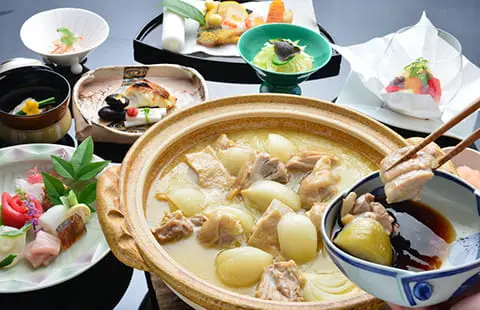
Mizutaki: A Deeply
Crafted Chicken Hot Pot
Mizutaki is Tsukiji Jisaku's most iconic dish. At first glance, it may seem simple: chicken, onion and a rich chicken broth. But behind that simplicity is a long and highly skilled process.
The broth is slowly prepared from carefully selected chicken, bones and collagen-rich parts. Over many hours, the ingredients release their natural flavour, creating a pale golden broth with exceptional depth, body and smoothness.
It is rich, yet clean. Comforting, yet refined. Deeply savoury, yet never heavy.
This is not an ordinary hot pot. It is a dish that reflects the Japanese belief that the most memorable flavours often come from restraint.
A Broth Made by One Dedicated Specialist
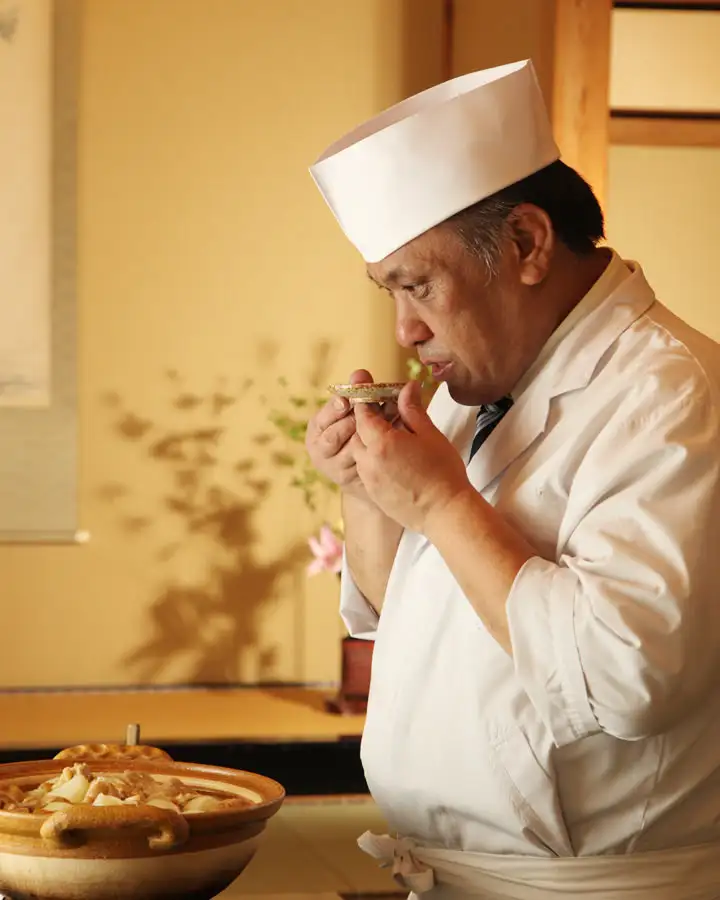
At Jisaku, mizutaki is entrusted to a dedicated chef known as the mizutaki specialist. The broth cannot be created simply by following a recipe.
The chef must understand the condition of the chicken, the strength of the heat, the changing aroma of the broth and the exact moment when its flavour reaches balance. The ingredients change from day to day, so the cooking must change too. This is why experience matters.
For Jisaku, consistency does not mean doing the same thing every day. It means making the right adjustments every day to create the same sense of depth, warmth and comfort in every bowl.
The Beauty of Simplicity
Only a few ingredients are needed at the table. Tender chicken. Sweet onion. A broth prepared with extraordinary care. By keeping the dish simple, each element becomes clearer.
The sweetness of onion softens the richness of the chicken. The chicken gives the broth depth. The broth brings every flavour together.
At the end of the meal, the remaining broth is transformed into rice porridge — a quiet final course, but often one of the most memorable: rice slowly absorbing every layer of flavour created throughout the meal.
Kaiseki Dining
A Journey Through
the Seasons
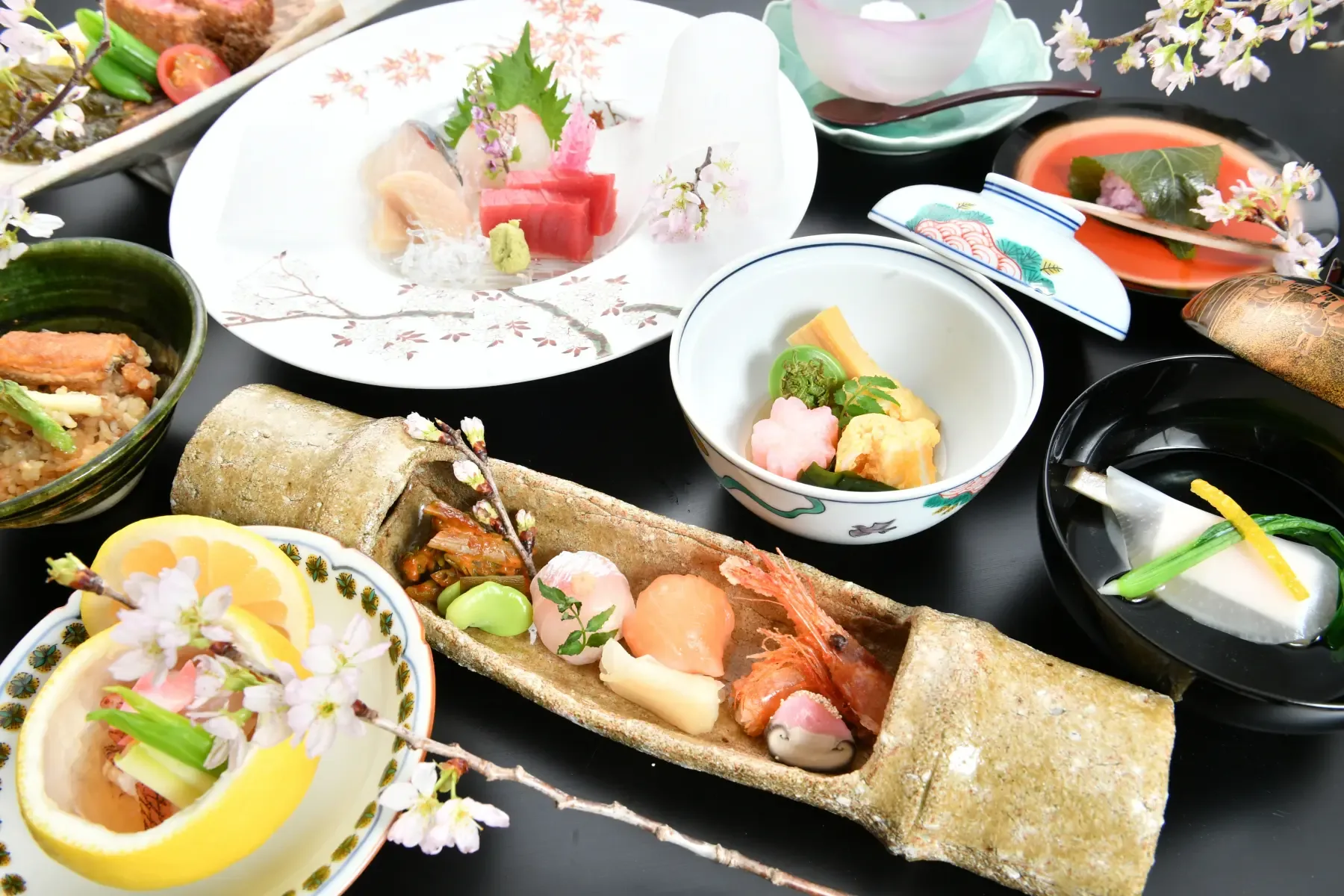
Kaiseki is a traditional multi-course Japanese meal. Rather than focusing on one main dish, kaiseki creates a journey through a sequence of small, carefully composed courses. Each course has a role.
- OpenSome are light and refreshing.
- AromaSome highlight the aroma of seasonal ingredients.
- DepthSome offer warmth and depth.
- BridgeSome prepare the palate for what comes next.
At Jisaku, kaiseki is designed to unfold gradually, allowing guests to experience Japanese cuisine as a progression rather than a single plate.
The Japanese Idea of Seasonality
Japanese chefs often think about ingredients in three stages:
Hashiri
The First Taste of the SeasonIngredients that arrive slightly before their peak season. They feel fresh, exciting and full of anticipation.
Shun
The Peak of the SeasonIngredients at their most flavourful and expressive.
Nagori
The Last Taste of the SeasonIngredients enjoyed as a season comes to an end, often with a feeling of appreciation and farewell.
This philosophy shapes the menu at Jisaku. A meal in spring may highlight mountain vegetables, bamboo shoots and delicate fish. A summer menu may feature eel, sweetfish or pike conger. Autumn may bring mushrooms and richer seafood. Winter may focus on crab, pufferfish and warming dishes.
Each menu is designed to make the season visible, fragrant and delicious.
The Foundation of Japanese Cuisine
The Quiet
Power of Dashi
Much of Japanese cuisine begins with dashi — a delicate stock made from ingredients such as kombu seaweed, dried bonito, mushrooms, seafood or chicken. It is not meant to overpower a dish.
Instead, it gives food depth.
It brings out the sweetness of vegetables, the natural flavour of fish and the richness of meat. It adds complexity without making a dish feel heavy. At Jisaku, dashi appears in many forms:
- SoupThe clear fragrance of a soup.
- SimmerThe gentle depth of a simmered dish.
- Hot PotThe richness of mizutaki broth.
- SauceThe layered flavour of sukiyaki sauce.
Dashi is often invisible, but it gives Japanese cuisine its structure. It is one of the reasons a dish can feel light while still being deeply satisfying.
Tempura at Your Table
A Live Expression
of Japanese Craft
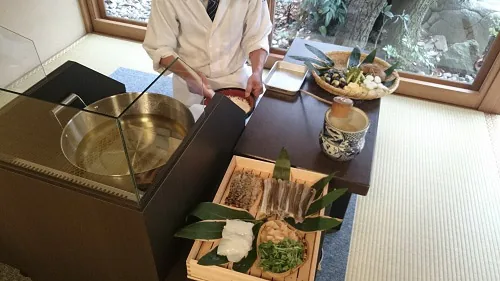
For selected private dining experiences, Jisaku offers in-room tempura prepared directly in front of guests. A chef brings a dedicated tempura station into the private room and cooks each ingredient one by one.
- HearThe gentle sound of the oil.
- SmellThe ingredients as they cook.
- WatchThe chef judge the exact timing of each piece.
Then, it is served immediately.
Tempura is best enjoyed at the moment it is finished.
Light Batter, Precise Timing
At Jisaku, tempura is prepared with a light batter designed to protect — not hide — the ingredient inside. The aim is to preserve the natural aroma, moisture and texture of seasonal seafood and vegetables.
- SpringA mountain vegetable should retain its gentle bitterness.
- SummerA seafood ingredient should remain sweet and delicate.
- AutumnA mushroom should release its fragrance.
- WinterA root vegetable should feel warm and full of character.
Each ingredient requires a different temperature, cooking time and technique. The difference between perfect and overcooked can be only a few seconds.
This is why tempura is not simply fried food. It is a precise form of cooking shaped by instinct, timing and experience.
Japanese Wagyu
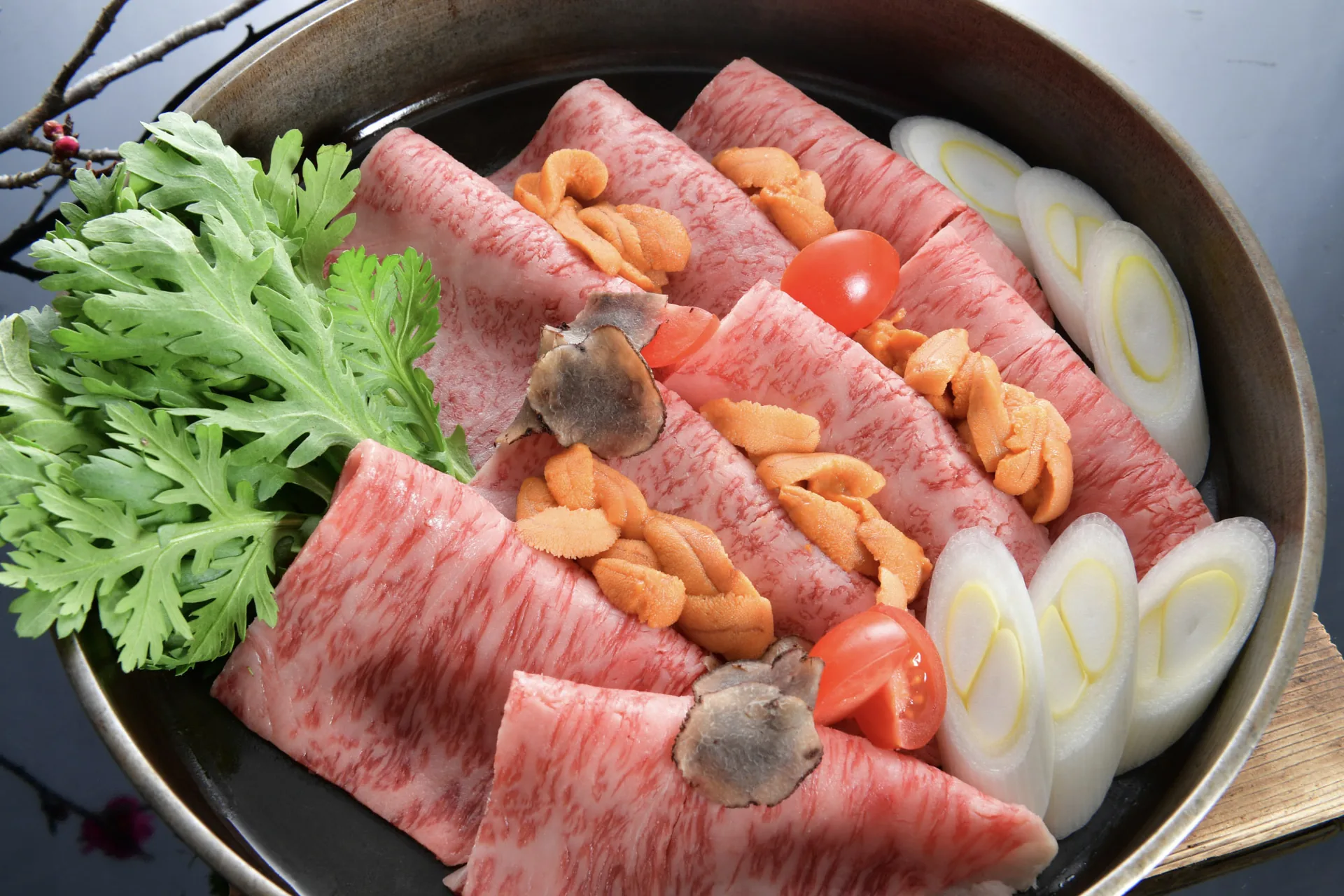
Sukiyaki & Shabu-Shabu,
Prepared at Their Best
Jisaku offers carefully selected Japanese wagyu beef in classic hot pot styles such as sukiyaki and shabu-shabu. The quality of wagyu is important, but the way it is cooked is equally important.
- TemperatureThe beef must be served at the right temperature.
- FatIts fat should gently melt, not become heavy.
- BalanceIts flavour should be balanced with broth, sauce and vegetables.
For these experiences, our attendants prepare the dish at the table and serve each portion at the ideal moment, so guests can relax, enjoy conversation and focus entirely on the food.
Sukiyaki With Layers of Flavour
Sukiyaki is a Japanese hot pot dish made with thinly sliced beef, vegetables and a rich soy-based sauce. At Jisaku, the sauce is built with multiple layers of savoury flavour, including ingredients such as kombu, dried mushrooms, soy sauce and carefully selected seasonings.
The result is not simply sweet or salty. It is deep, aromatic and balanced.
As the meal progresses, the flavour in the pot changes. The beef, vegetables and sauce gradually come together, creating a richer taste with every course. That changing flavour is part of the pleasure of sukiyaki.
The Art of Presentation
Japanese Cuisine Begins
Before the First Bite
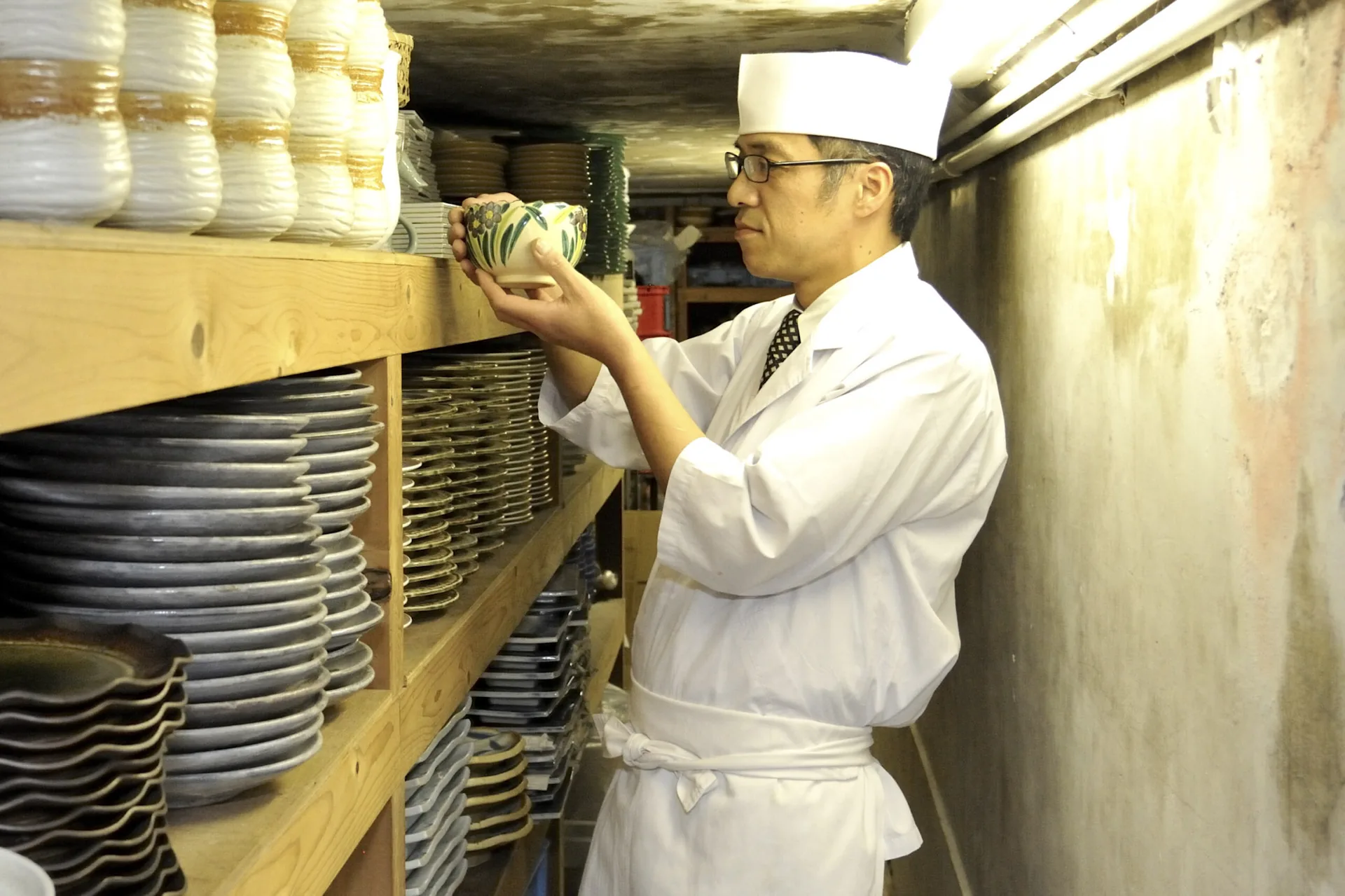
In Japan, food is often described as something to be enjoyed with the eyes before it is tasted. At Jisaku, the choice of tableware is part of the cuisine.
- ColourThe colour of a plate can make a seasonal ingredient appear more vivid.
- TextureThe texture of a bowl can add warmth to a winter dish.
- GlassA glass vessel can bring a feeling of coolness to a summer course.
Ceramics, glassware and seasonal details are selected to complement each dish.
A plate is not simply a container. It is part of the landscape of the meal.
Dining for Every Guest
Cuisine,
Adapted to You
We want every guest to dine with ease. With advance notice, our chefs prepare dedicated dishes for allergies, dietary choices and religious or cultural needs — reworking a course, down to the dashi itself, so that nothing essential is lost.
Tell us how you eat, and we will design a menu around you.
Please share your requirements when you reserve. For severe allergies we cannot fully guarantee the absence of all traces in a shared kitchen, so a conversation in advance is essential.
- AllergiesShellfish, buckwheat, egg, dairy, wheat and more — shared in advance and prepared as dedicated dishes.
- VegetarianFull courses rebuilt with a plant-based dashi in place of bonito or meat.
- VeganEntirely plant-based menus — seasonal, and complete as a kaiseki journey.
- Pork-free / alcohol-freeDishes prepared without pork or alcohol on request.
- Cultural / ReligiousIngredients and preparation adapted to a range of beliefs and customs.
- PreferencesLighter oil, no raw fish, milder seasoning — tuned to how you like to eat.
A Taste of Japanese Time
Food, Made Through Patience
- BrothPatience in preparing broth.
- SeasonPatience in waiting for ingredients to reach their season.
- MomentPatience in finding the perfect moment to cook, serve and enjoy.
From a bowl of mizutaki to a piece of tempura, every dish carries the work of chefs who believe that good cooking begins with respect: respect for ingredients, for time, for season and for the guest at the table.
Come for the food. Leave with a deeper taste of Japan.
Whether you are discovering Japanese cuisine for the first time or returning to it with curiosity, Jisaku invites you to experience food shaped by tradition, precision and the rhythm of the seasons.
FREQUENTLY ASKED QUESTIONS
FAQ
Do I need a reservation? +
Yes, we recommend booking in advance. Because our kaiseki and hot-pot courses are prepared to order, please let us know your preferred date, number of guests and any requests when you reserve.
What kind of cuisine do you serve? +
Seasonal kaiseki, our signature mizutaki chicken hot pot, in-room tempura, and Japanese wagyu prepared as sukiyaki or shabu-shabu. Menus change with the season to serve each ingredient at its best.
What is mizutaki, and can we order it? +
Mizutaki is our most iconic dish — a pale golden chicken broth simmered for many hours by a dedicated specialist. It is available as a course; please request it when booking, and finish with rice porridge made from the remaining broth.
Can tempura or wagyu be cooked at our table? +
Yes. For selected private-dining experiences a chef or attendant prepares tempura, sukiyaki or shabu-shabu right in your room, serving each piece at the ideal moment. Please ask when you reserve.
Can you accommodate allergies, vegetarian or vegan dining? +
Yes. With advance notice we prepare dedicated dishes for allergies, vegetarian and vegan diets, and requests prepared without pork or alcohol, as well as other religious and cultural needs. For severe allergies we cannot fully guarantee the absence of all traces in a shared kitchen, so please share full details when you reserve. See Dining for Every Guest.
What should I wear, and do I remove my shoes? +
There is no strict dress code. Shoes are removed at the entrance and our staff will look after them; corridors and private rooms are tatami, so please wear socks.
Do you have English-speaking staff and an English menu? +
Yes. We have English-speaking staff, and English menus are available.
How many guests can you accommodate, and are meals private? +
All meals are served in private rooms. We have 19 rooms of various sizes for approximately 2 to 120 guests. We are sorry, but reservations for one guest are not accepted.
How much does a meal cost?+
Course menus are ¥27,500 or ¥35,000 per guest for our seasonal kaiseki, mizutaki, sukiyaki and shabu-shabu. The tempura course is ¥35,000, and special courses are ¥55,000 or ¥88,000. A private room fee from ¥13,200 per room and a service charge (15% at lunch, 20% at dinner) are added, together with 10% consumption tax. As a guide, dinner for 4 guests including drinks comes to about ¥212,520 in total.